

















Doctors spend years training in medicine. Almost none of that training covers what happens to a claim after it leaves the front desk. Yet that part of the process determines whether the practice actually paid for the work that was already done.
Somewhere around 80% of medical claims contain at least one error, usually a coding mistake or documentation that does not quite line up with what the payer needs to see. Claim scrubbing is what catches those errors before they become a problem, and solid revenue cycle management depends on catching them before submission, not cleaning up the mess after a denial has already arrived.
In this blog, Unify RCM walks you through what claim scrubbing involves, how it stacks up against manual review, what to look for if you are evaluating scrubbing technology, and why all of this matters more than most practices realize.
What Is the Meaning of Claim Scrubbing?
Claim scrubbing is the step where a claim gets checked before it is submitted, making sure it is accurate, complete, and coded the way the payer expects. Every condition documented and every treatment provided needs to map to the right code, formatted in the way that specific payer requires.
When something is missing or wrong, the whole process grinds to a halt. The claim comes back denied; someone has to figure out what went wrong, fix it, and send it back through again. One commonly cited figure puts the cost of reworking a single denied claim at around $118. Multiply across a practice dealing with dozens of denials a month, and it becomes obvious why getting this right matters.
How Does Claim Scrubbing Compare to Doing It Manually?
Manual review means someone on the billing team goes through claims one at a time, relying on what they know and whatever reference material they have on hand. It can work but how well it works depends entirely on who is doing it, how busy they are, and how much volume is coming through that week.
Automated claim scrubbing checks every claim the same way, every time, against the actual current coding standards and payer rules. It flags the obvious problems automatically and only kicks the complicated cases up for a person to look at.
| Manual Review | Claim Scrubbing |
| Staff go through claims one by one (slow and repetitive) | Every claim is checked automatically, no extra effort |
| Quality depends on who's doing it and how busy they are | The same rules applied to every single claim |
| Easier to miss things when volume is high | Catches both common and tricky errors before submission |
| Can create a backlog that slows everything down | Moves through claims quickly without holding things up |
| Hard to keep up with payer rules that keep changing | Rules updated in one place, applied everywhere |
| Pulls trained staff into repetitive checking work | Staff only deal with the cases that genuinely need a person |
| Needs more people as claim volume grows | Scales without needing to hire more staff |
Does Claim Scrubbing Actually Get You Paid Faster?
Yes, and the effect is pretty direct. Clean claims going out for the first time means a lot less back and forth with the payer. Instead of wasting time fixing a claim that already got rejected, the whole process is faster, and the payment shows up sooner.
Practices with strong clean claim rates consistently get paid faster and deal with fewer delays, which makes the whole financial picture more predictable.
Faster, steadier payments give a practice more room to breathe financially. It is easier to plan staffing, equipment, or anything else when you are not sitting around waiting on reimbursements that should have arrived weeks ago.
Does This Affect Patients at All?
It does, even though patients rarely see it directly. When claims are accurate from the start, patients are less likely to get hit with a confusing bill weeks later because something was processed incorrectly. Billing that is clear and correct builds trust, and that trust spills over into how patients feel about the practice as a whole.
Does It Take Pressure Off Billing Staff?
Automated scrubbing handles the repetitive checking that used to take time from people who could be doing more useful work. Instead of reading through every claim line by line, the team steps in for the cases that need a human decision. Over time, that lighter cognitive load makes a real difference in roles that already deal with a lot of pressure.
Does Scrubbing Help with Compliance?
Yes, and the stakes here keep rising. Coding rules change. Payer requirements shift, and what counted as acceptable documentation last year might not cut it this year. Claim scrubbing does not just keep the denial rate down; it lowers audit risk and protects revenue from being called back over errors that should have been caught before the claim ever went out.
What Should You Look for in Claim Scrubbing Software?
Is It Up to Date?
Accuracy is not just about catching obvious stuff. The software needs to be checked against current coding standards and current payer rules. These include anything specific to your specialty. Software running on outdated rules gives you a false sense of security. The claim passes the scrub and still comes back denied, because the rules it was checked against were not the rules the payer is actually using.
Will It Work with What You Already Have?
Scrubbing software does its best work when it sits naturally inside your existing workflow, connected to your EHR and practice management system. Without that connection, you end up with bottlenecks that slow your team down and undercut the whole point of automating it in the first place.
Can You See What It's Doing?
You want visibility into how edits get made, how the rules get updated, and what the change process looks like. That transparency matters when a provider or someone in leadership asks why a claim got flagged or held back.
Is It Easy to Use?
The software should make life easier almost immediately. If it takes weeks of training before your team feels comfortable using it, that is time and money working against you instead of for you.
Will It Still Work When Practice Grows?
Practices change — more patients, more services, different staffing levels. The right scrubbing tool grows alongside that without forcing you into a complete system change every time something shifts.
Does It Trust Your Team's Judgment?
Automation should make your team's job easier, not replace their judgment entirely. The better tools flag issues clearly, let a person step in when it needs one, and fit how your team works.
Where Does Claim Scrubbing Fit into the Bigger Picture of Medical Billing?
Good medical billing services treat claim scrubbing as one important checkpoint inside a much larger process. Scrubbing catches errors before submission, but it works best alongside accurate coding from the start, proper eligibility checks before the appointment, and a real denial management process for the handful of claims that still slip through despite a thorough scrub.
Why Does Any of This Matter for the EOB You Eventually Get Back?
There is a direct line between claim scrubbing and what shows up on the EOB in medical billing later, even though it is not always obvious at first glance.
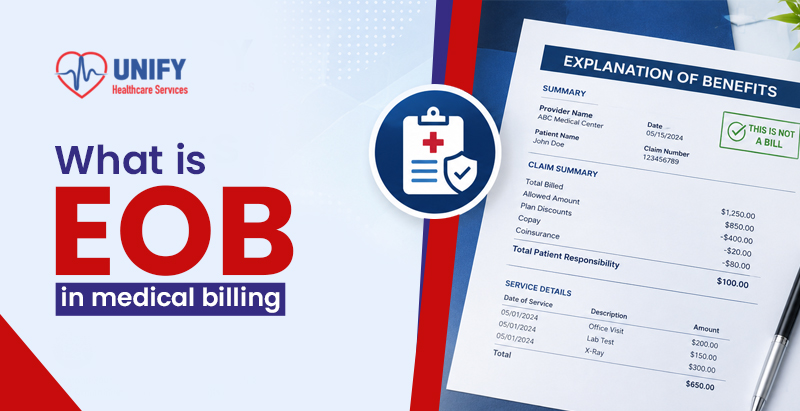
An Explanation of Benefits is what the payer sends back showing what was billed, approved, denied, and the reason behind each decision. A claim that is clean comes back with an EOB that is easy to check against what was sent. A claim that went out with errors comes back with an EOB full of denial codes that someone now has to investigate, appeal, and resubmit.
Checking EOBs carefully against what was billed is part of closing the loop on the whole revenue cycle. When scrubbing is doing its job properly, EOB review becomes a quick
check.
At Unify RCM, scrubbing happens on every claim before it leaves the practice. That consistency is what keeps first-pass acceptance rates high and accounts receivable predictable. It also keeps the gap between what a practice earns and what it actually collects as small as possible.
Frequently Asked Questions
It is the step where claims get checked before they are submitted, to make sure everything is accurate, complete, and matches what the payer expects. That includes diagnosis and procedure codes, modifiers, patient and insurance details, and the specific formatting rules of each payer.
No, and the distinction matters. Scrubbing happens before a claim ever reaches the payer. The goal is to stop the denial from happening at all. Denial management is what happens after a claim has already been rejected. Both matter, but they sit at completely different points in the process.
Yes. Bigger organizations tend to adopt it first because of the volume they are dealing with, but smaller and mid-sized practices see real benefits too, especially as they grow. It cuts down on manual checking and applies the same standard to every claim regardless of how big or small the billing team is.
Wrong or outdated CPT and ICD-10 codes, missing patient information, mismatched provider details, and billing for something that is not covered under the patient's plan. These are some of the most common things scrubbing software flags before a claim ever reaches the payer.
By catching and fixing errors before a claim goes out, scrubbing meaningfully reduces the chance of an outright rejection. Fewer rejections means faster payments, less time spent on rework, and a revenue cycle that performs more consistently from one month to the next.