






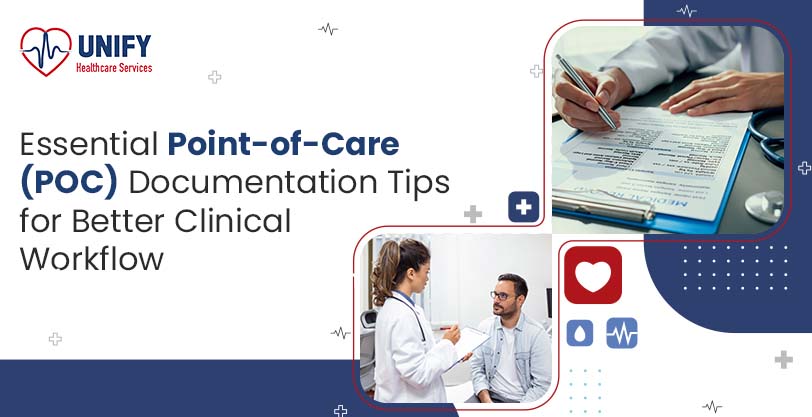
Over the past few years, clinical teams have been juggling more responsibilities than ever, shorter appointment windows, heavier documentation demands, and high expectations for accuracy. In between all this, one thing has quietly become the backbone of efficient patient care: documenting information right where care happens. Good Point-of-Care documentation may look like a simple habit on the surface, but anyone working inside a clinic knows that it influences everything; from patient safety to smoother workflows and even timely reimbursements.
When documentation is delayed or incomplete, the ripple effects spread fast: longer workdays, miscommunication between departments, coding confusion, and eventually, reimbursement issues that slow down the entire revenue cycle. But when documentation is done well at the patient’s side, the entire day feels lighter, cleaner, and far more organized. Below are some tips that come from real clinical workflows, the things that actually make a difference on busy days.
Document While Care is Happening:
One of the biggest changes clinics have seen is the push toward real-time charting. It may feel small, but the difference between documenting immediately and catching up hours later is massive. When you update a chart while you’re still with the patient, or right after the interaction, you’re capturing details while they’re fresh.
What this helps with:
- Fewer corrections later
- More accurate descriptions
- Cleaner notes for coding teams
- Less end-of-day “documentation catch-up” stress
Real-time charting eliminates the mental load of remembering little details from earlier visits.
Use Templates that Actually Match Your Workflow:
Templates are often misunderstood. When thoughtfully designed, they are not restrictions; they are shortcuts that reduce cognitive effort. A good template doesn’t force you into generic fields but instead mirrors the way you practice medicine: the questions you ask, the patterns you follow, and the type of information you review for most visits.
Well-structured templates:
- Prevent missing key clinical information
- Reduce writing time
- Support billing accuracy
- Keep documentation consistent among staff
Many teams customize templates after noticing what details frequently get missed or what coders often request clarification for. This is where collaboration between clinicians and administrators truly pays off.
Make Sure the Tools you use don’t slow you down:
It’s surprising how often documentation issues come down to something simple: a workstation that lags, a tablet that dies too quickly, or carts placed too far from where care is provided. Little delays like these add up across a full day.
A supportive workstation setup means:
- Lightweight carts for easy mobility
- Devices that boot quickly and have long battery life
- Stable Wi-Fi everywhere in the clinic
- Screens adjusted at comfortable heights
If teams seem frustrated during documentation, the issue is often the equipment, not the person.
Offer Ongoing Training, not just a one-time orientation:
Every clinic introduces new tools or processes from time to time, and the reality is that documentation requirements never stay still. Instead of one training session when the EHR is implemented, ongoing check-ins help everyone stay aligned.
This includes:
- Short refreshers on layout changes
- New payer documentation rules
- Tips based on common documentation mistakes
- Coding updates that affect clinical notes
Even experienced clinicians appreciate small reminders, especially when regulations shift or systems update quietly in the background.
Stop Duplicate Documentation before it eats up hours:
Almost every practice has run into this at some point: clinicians enter the same information twice, or the system asks for details that already exist somewhere else. Every unnecessary field adds time and introduces more opportunities for errors.
To reduce duplication:
- Allow auto-fill for routine fields
- Integrate EHR with billing/coding systems
- Remove redundant prompts
- Use smart fields that sync across sections
The goal is simple: one entry, multiple downstream uses.
Keep Notes Clear and Clinically Useful!
A note doesn’t need to be long to be good. What matters is clarity, accuracy, and relevance. A clean note speeds up coding, supports continuity of care, and makes life easier for anyone reviewing charts later.
Solid documentation usually:
- Describes symptoms objectively
- Avoids guesswork or extra fluff
- Clearly lists vitals, medications, allergies
- Reflects the provider’s thought process
The best notes feel like a blend of precision and straightforward communication, nothing extra, nothing missing.
Make Sure Documentation Connects Smoothly with Billing:
Coding teams rely entirely on what’s written in the patient chart. If documentation is incomplete or unclear, coders either have to ask for clarifications or code conservatively, which can reduce reimbursement.
This is also where working with support teams, such as Unify Healthcare Services, offering medical billing services in Texas can be a game-changer.
Billing-friendly documentation clearly shows:
- The reason for the visit
- Services performed
- Medical necessity
- Time spent when relevant
- Details tied to the correct level of care
When clinicians and billing teams communicate regularly, denials decrease almost instantly.
Keep Compliance at the Center of all Documentation:
Regulations aren’t optional, and they change constantly. Documentation is one of the main areas auditors look at, so compliance has to be built into everyday habits, not added as an afterthought.
Compliance-friendly notes should include:
- Accurate timestamps
- Clear provider identity
- Correct patient identifiers
- Proper storage and secure access
- Complete, legible entries
Working from compliance-first habits protects both the patient and the practice.
Documentation should be a team effort, not a burden on one person
Smooth documentation doesn’t happen because one nurse or one doctor is excellent. It works when the entire team: front desk, MAs, nurses, physicians, billing staff, everyone shares information consistently.
When everyone documents what they’re responsible for, hand-offs become cleaner, messages don’t get lost, and patients experience better continuity of care.
Use technology that reduces the manual load:
Healthcare tech has grown quickly, and many tools genuinely make documentation easier instead of more complicated. Some reduce typing, others flag missing information, and some help catch inconsistencies before they turn into denials.
Examples include:
- Voice dictation tools
- Automated alerts for incomplete notes
- AI-supported terminology prompts
- Smart coding helpers
- Systems that pull vitals or labs automatically
The right tech doesn’t replace good documentation; it in fact amplifies it.
Final thoughts:
When point-of-care documentation becomes part of a clinic’s culture, not a box to check, the entire workflow improves. Patients moved more smoothly through the system; clinicians spent fewer hours catching up after hours, coders received cleaner charts, and claims were processed without unnecessary delays.
As workflow pressure rises in today's healthcare, an organization that invests in sound POC habits and supportive systems is also positioning itself for smoother operations and healthier financial performance. Partnering with a trusted medical billing company like Unify Healthcare services can also ensure every detail documented at the bedside turns into accurate, timely reimbursement.
Reach out to us and start building stronger healthcare practice now!
Frequently Asked Questions
In medical billing, POC means capturing patient care details at the exact moment care happens, not hours later. It’s the notes, actions, and decisions recorded while the visit is still unfolding. At Unify RCM, POC documentation helps ensure billing reflects real care, not reconstructed memories or assumptions.
POC medical billing covers documenting symptoms, assessments, procedures, and provider decisions as they occur. It also includes entering this information into clinical and billing systems without delay. Unify RCM focuses on capturing the full story of the visit, not just fragments that happen to fit a code.
POC matters because accuracy fades with time. When documentation is delayed, details slip or get simplified. Unify RCM treats point-of-care records as the foundation for clean coding, since real-time notes give coders context, intent, and clarity, things insurers quietly look for when reviewing claims.
Most denials start with missing or unclear documentation. When records are completed at the point of care, fewer gaps exist for payers to question. Unify RCM uses POC billing to strengthen claims before submission, making it harder for insurers to challenge what was done or why.